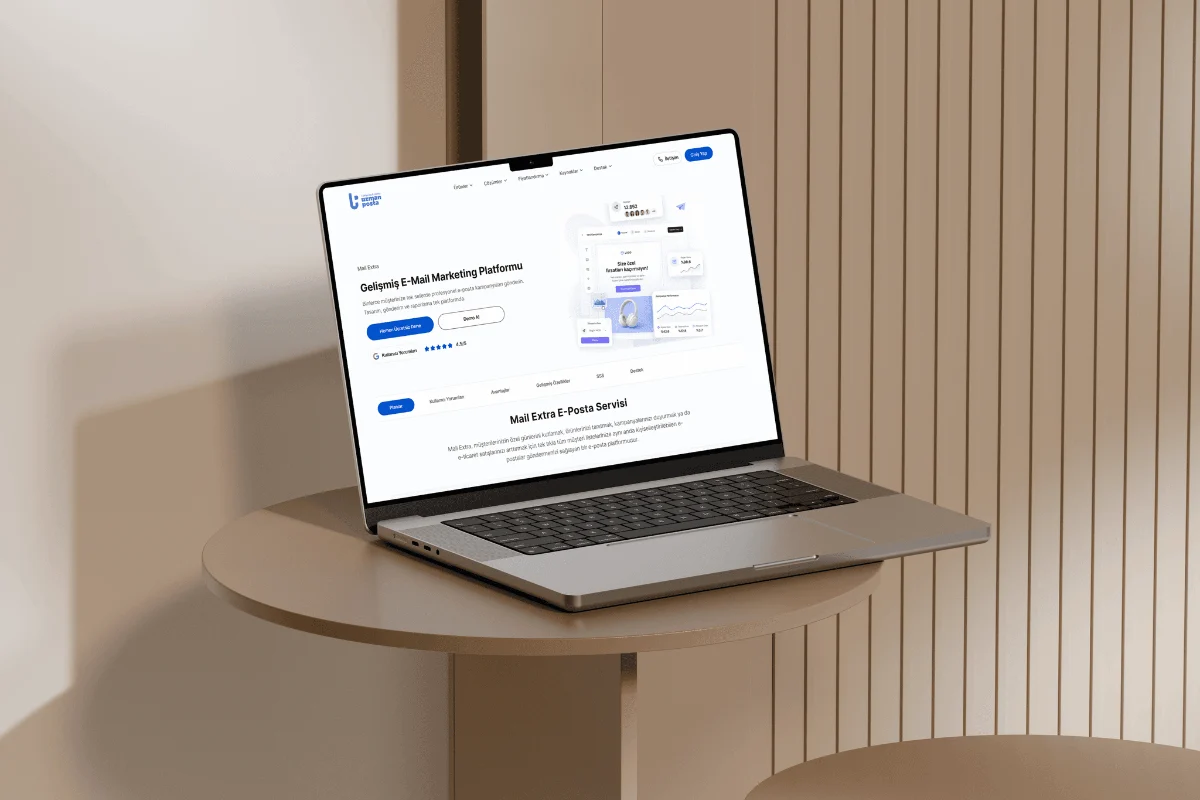
MindAid · Concept Project
A mental health app for iOS and Android combining therapy booking with an AI chatbot. Concept project from the CareerFoundry UX/UI program.
Overview
Objective
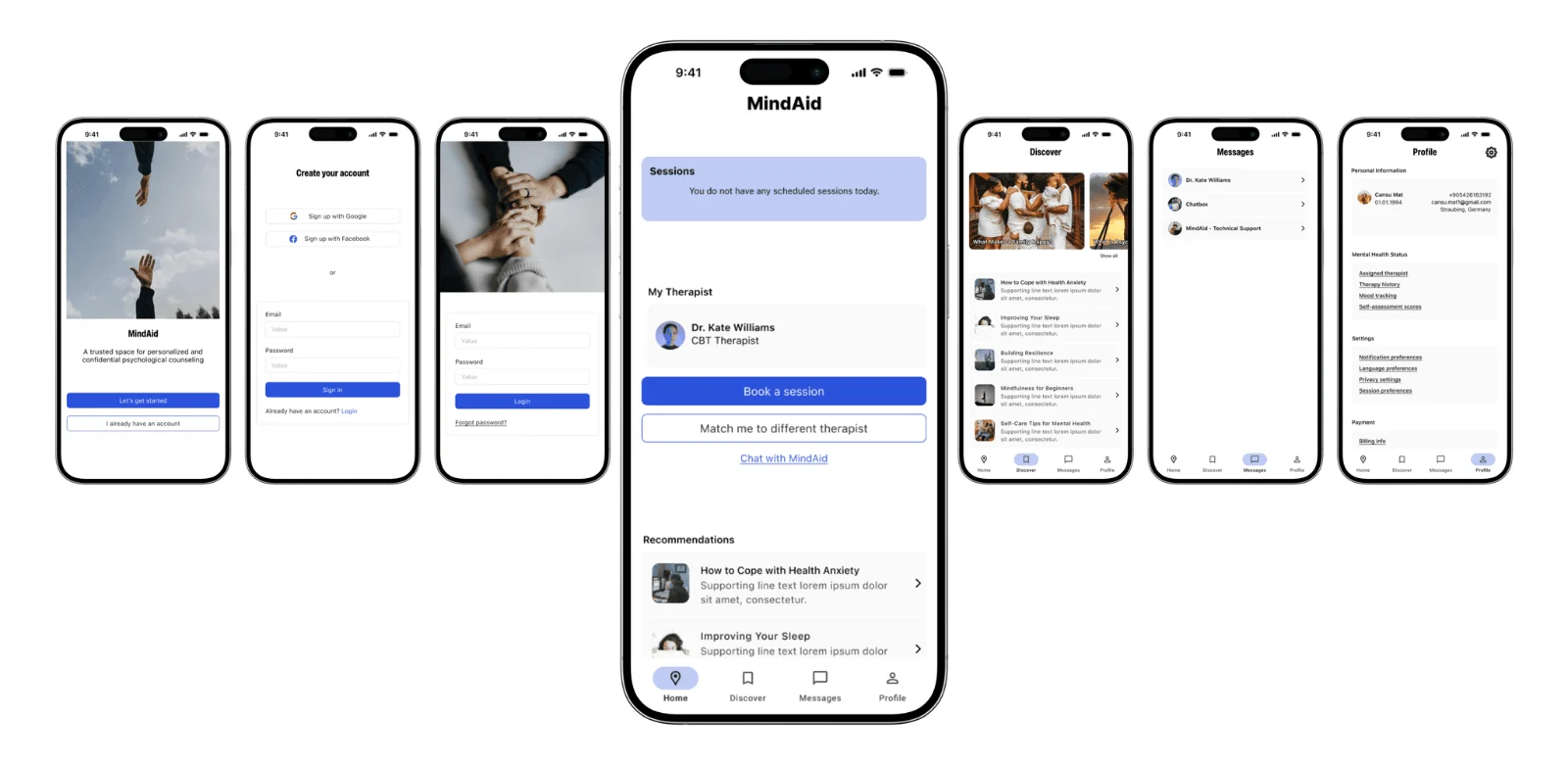
The goal was to design a native app for iOS and Android that provides accessible mental health support through scheduled therapy sessions and an AI-powered chatbot. The platform aims to bridge the gap in mental health care by offering timely guidance and professional therapy to help users manage their well-being effectively.
Problem
Many people struggle to access timely mental health support due to long waiting lists, the limited availability of therapists, and the stigma associated with seeking help.
Stage 1. User Research
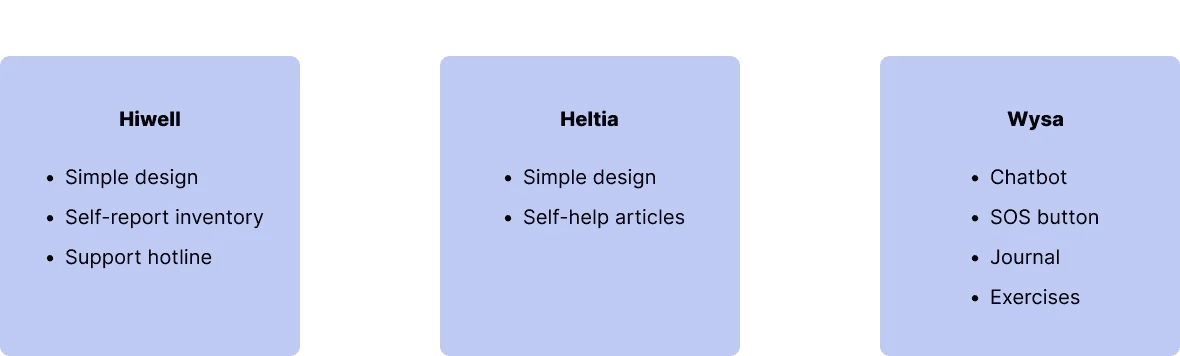
Competitor analysis: Conducted competitor analysis to understand the landscape of existing mental health apps and identify areas for differentiation. Evaluated leading platforms on features such as therapy session scheduling, AI chatbot capabilities, accessibility, and user experience. The analysis revealed gaps in personalized interaction, user-friendly design, and integration of professional support with AI tools.
Stage 2. Concept Development and User Flow Design
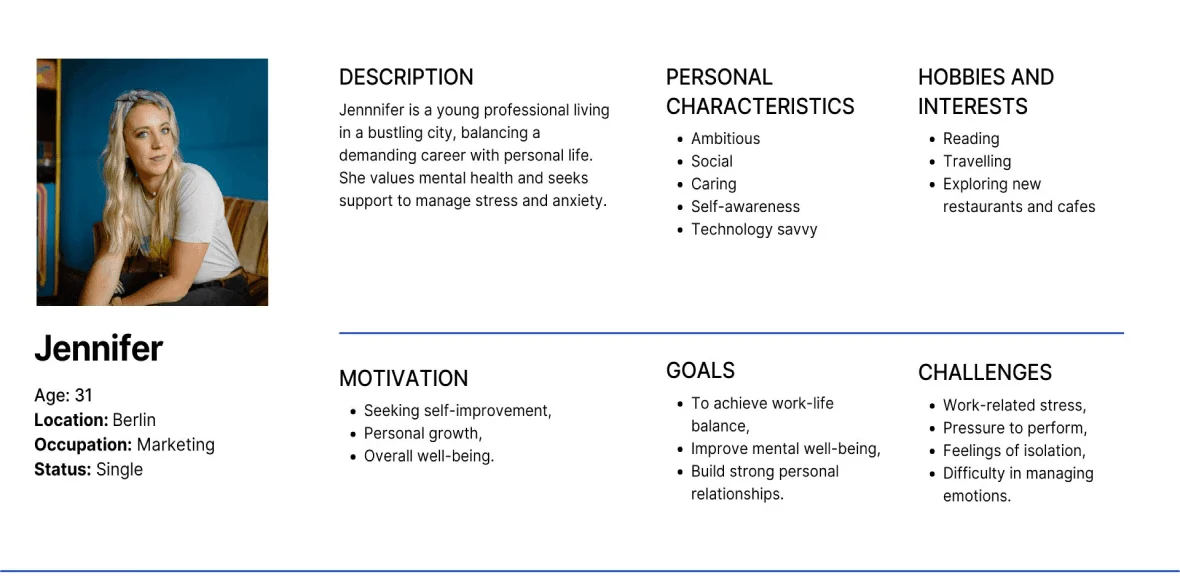
Developed user personas and scenarios to guide the design process and ensure a user-centered approach.
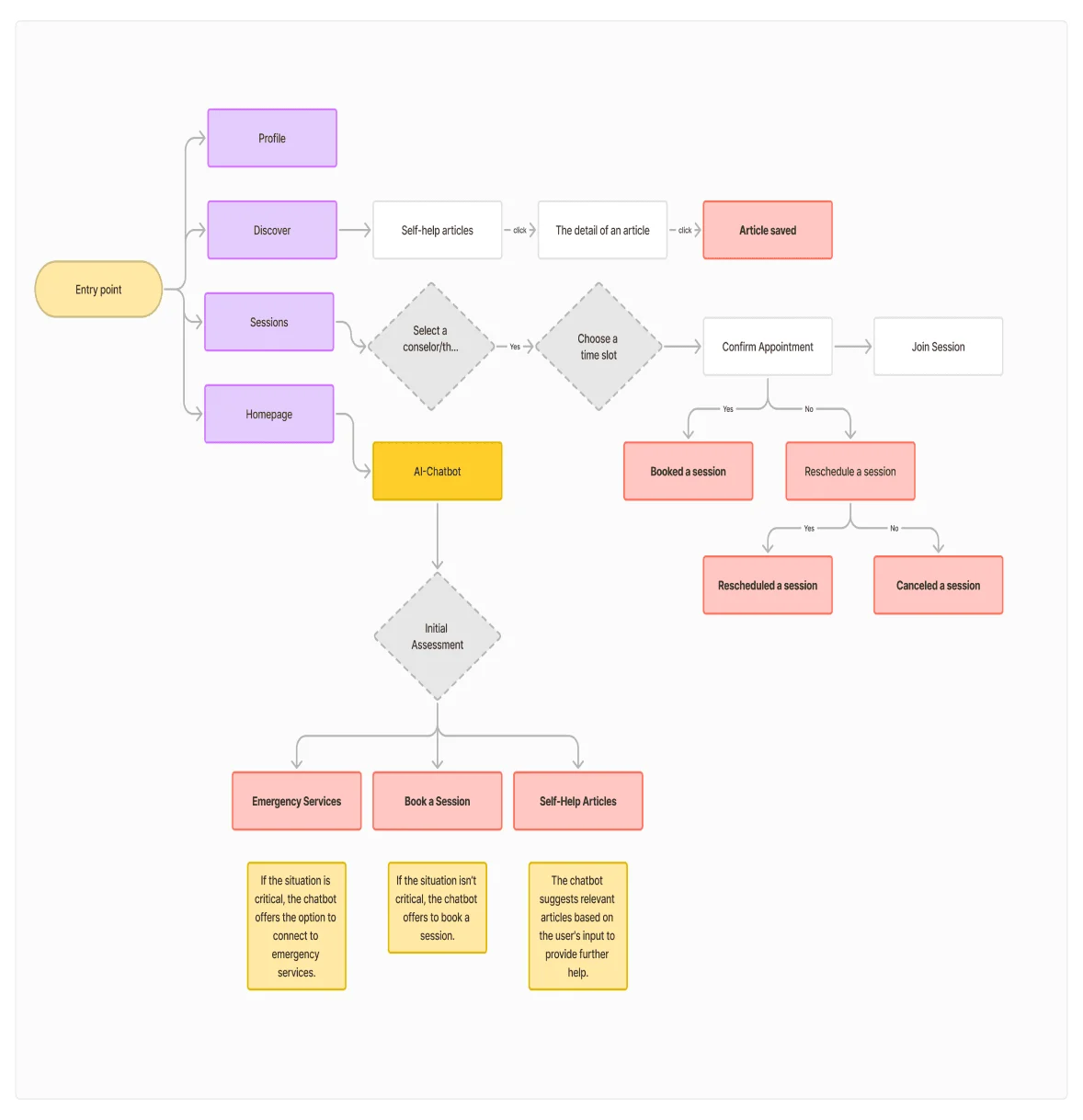
Mapped out user flows for key app functionalities, including profile management, booking a session, accessing self-help articles, and interacting with the AI-powered chatbot. Prioritized simplicity and intuitiveness in the navigation structure to enhance user engagement.
Stage 3. UI Design and Prototyping
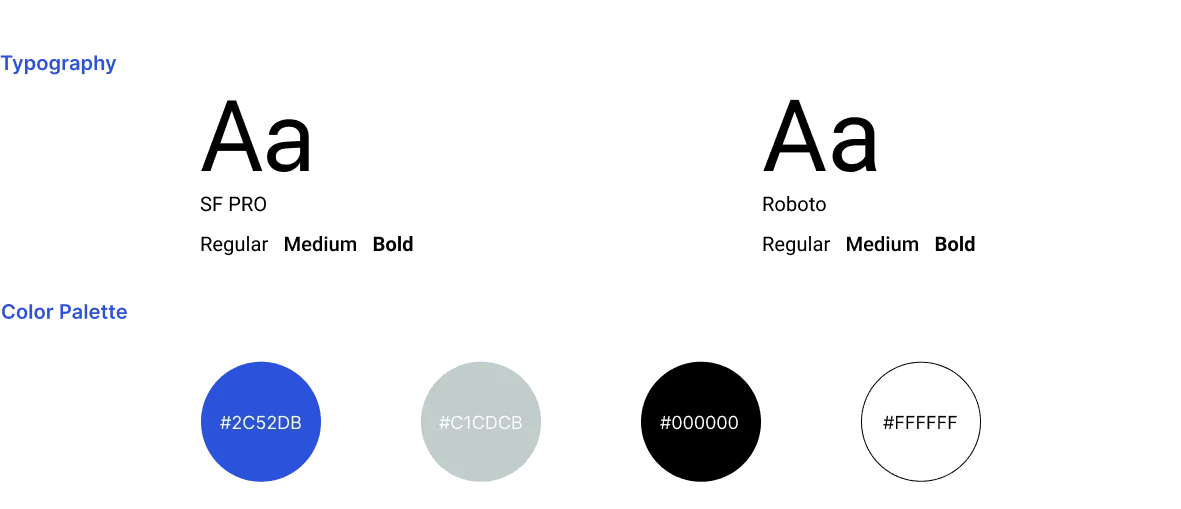
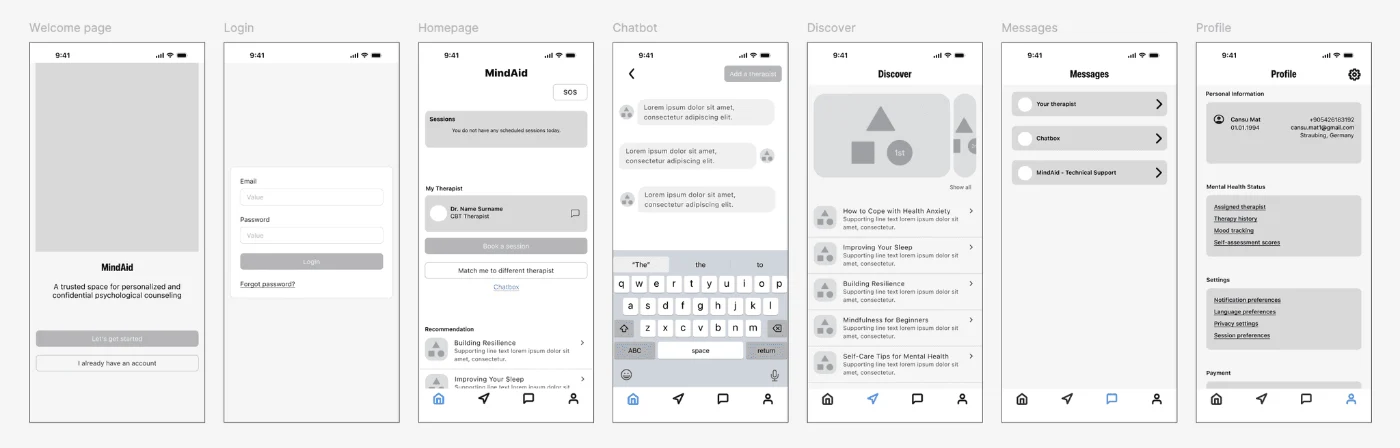
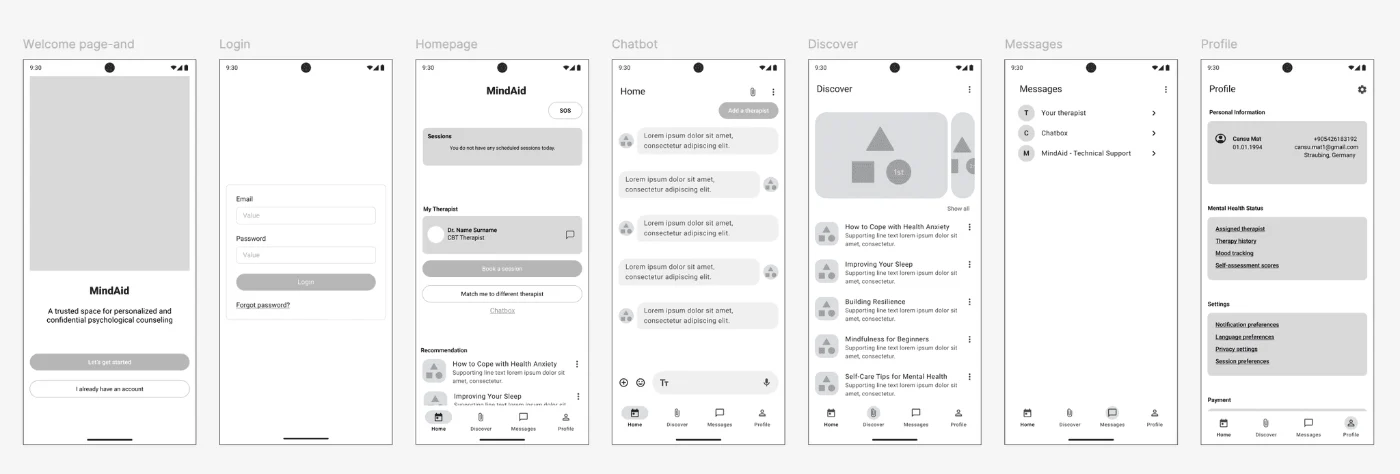
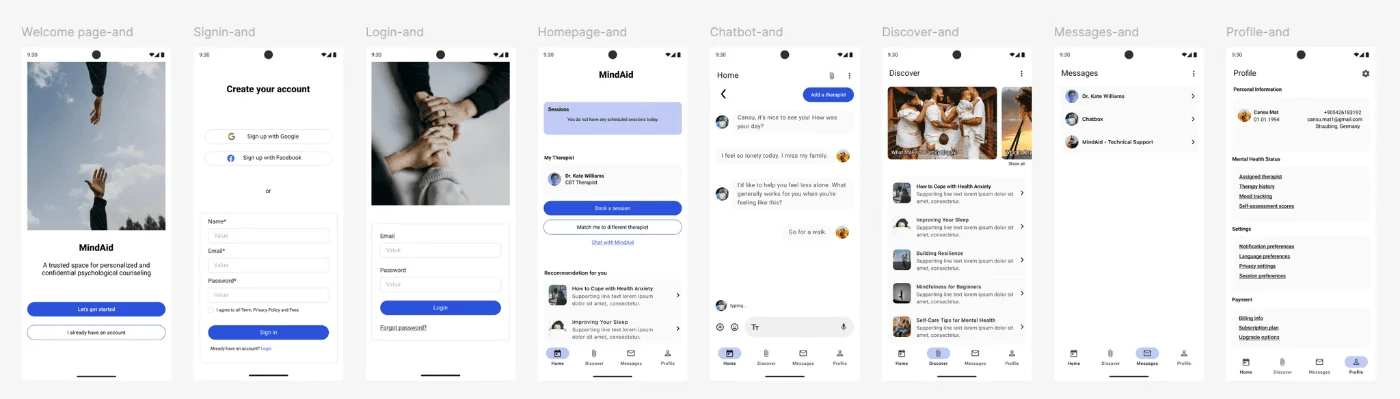
Created detailed wireframes and interactive prototypes using Figma, focusing on crafting an inviting and user-friendly interface. Selected a calming and professional color scheme and typography that aligns with the app's mental health focus and supportive environment.
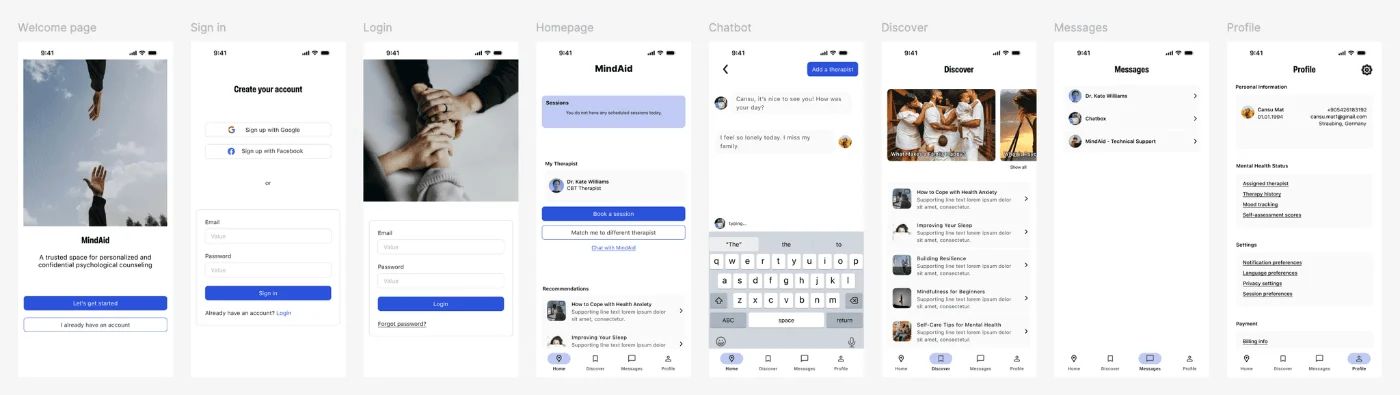
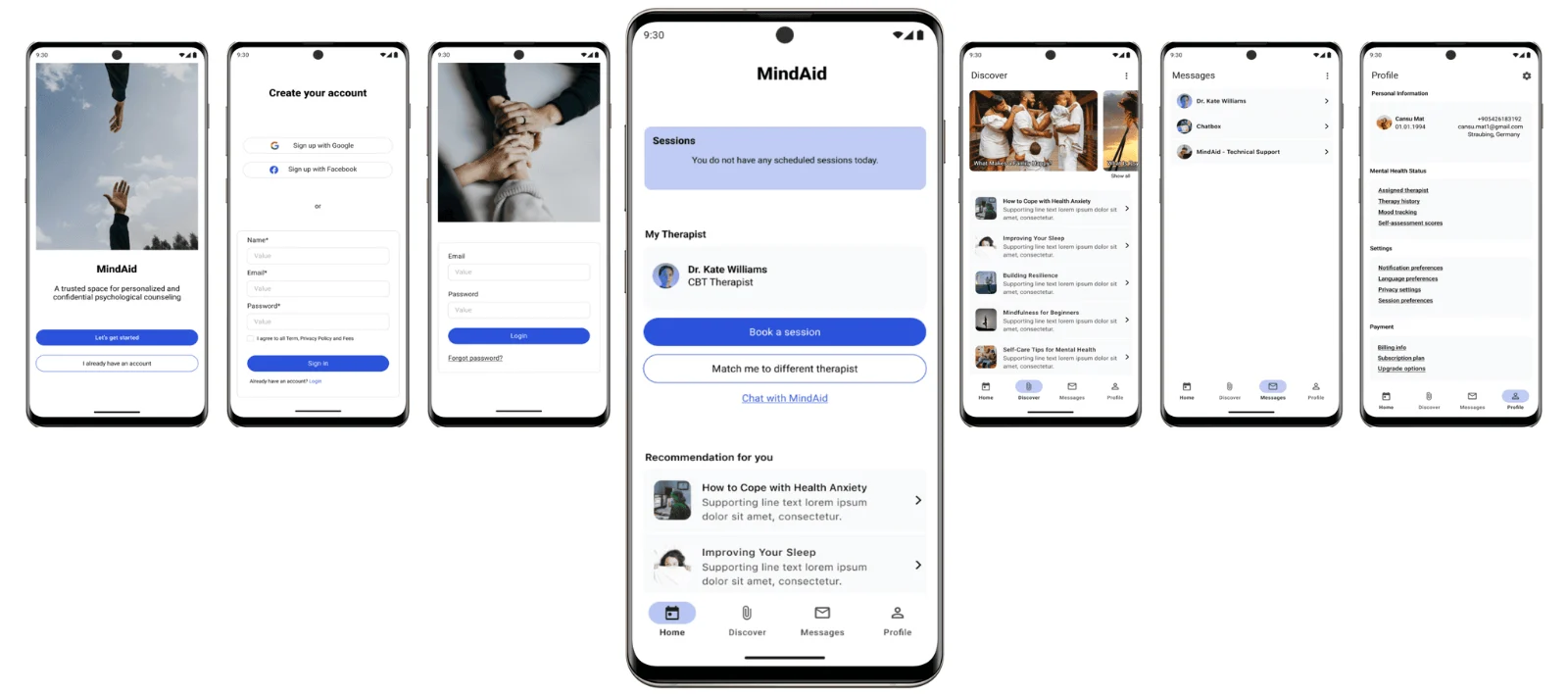
Developed high-fidelity prototypes that showcased the app's core features, including a dynamic homepage, an AI-powered chatbot, scheduled therapy sessions, and self-help resources.
iOS
Android
Stage 4. User Testing and Iteration
Organized user testing sessions with 5 participants to gather feedback on the app's usability and appeal. Utilized both in-person and remote testing methods to collect a wide range of insights.
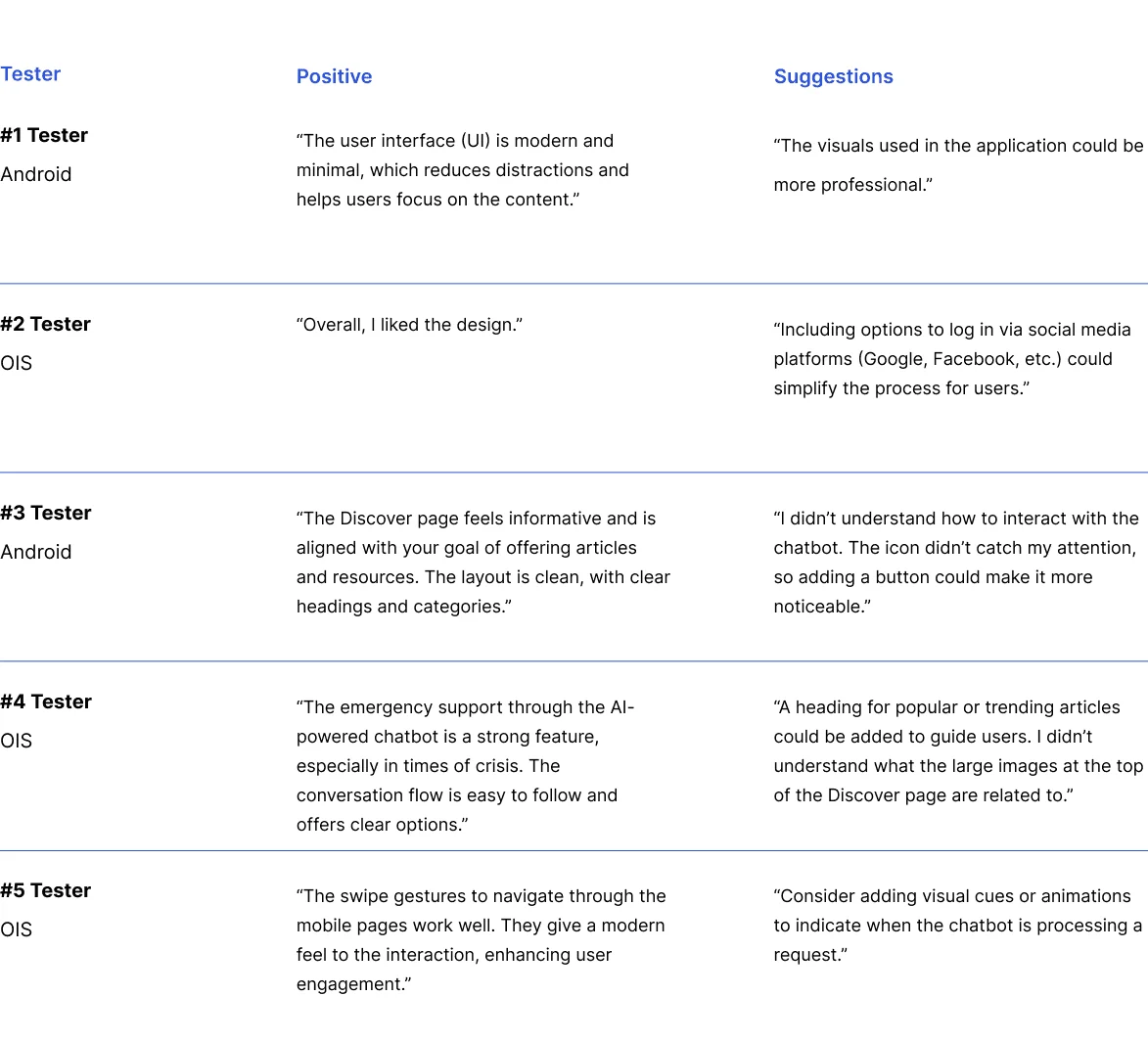
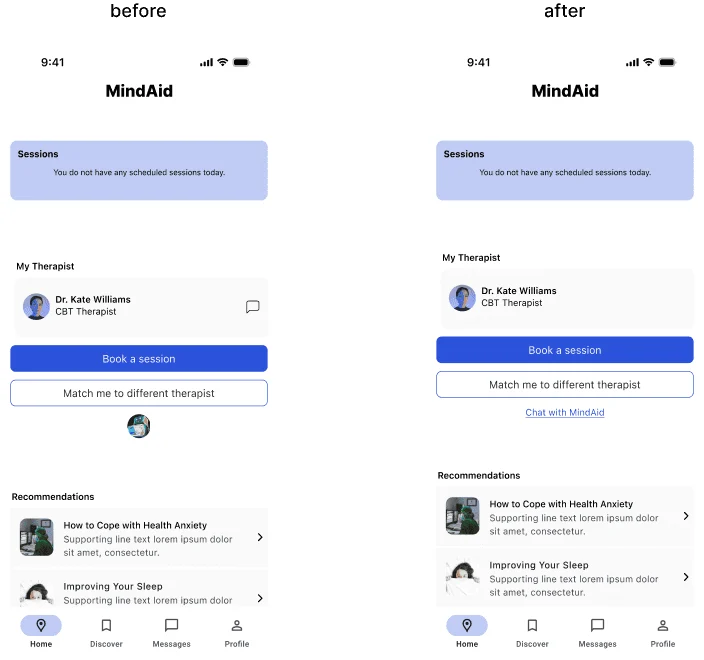
Analyzed feedback to identify usability issues and areas for improvement. Implemented design iterations to address user concerns, enhance the app's functionality, and improve the overall user experience. For example, the unclear chatbot icon was replaced with a clearly labeled "Chat with MindAid" button to improve user understanding and make interactions more accessible.
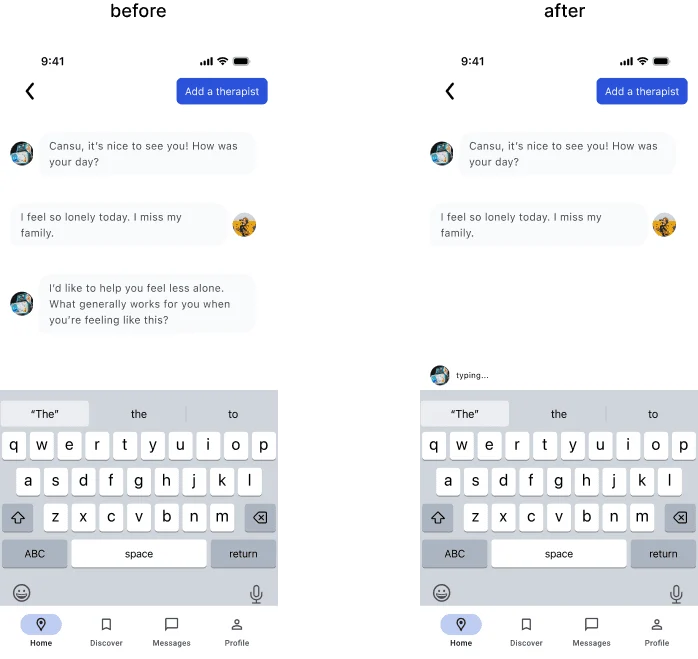
A "typing" indicator was added to the chatbot interface, providing real-time feedback to users while the chatbot generates responses, making the experience more engaging and intuitive.
Stage 5. Final Presentation
Compiled and presented a comprehensive project report to the mentors, detailing the design process, user testing findings, and final app design. The presentation emphasized the chatbot's potential to enhance user engagement and provide valuable mental health support.
Android
Reflections
This was a concept project, but it sat close to my own field. Having worked as a psychological counselor, I knew how much hesitation people feel before reaching out for help, and I wanted the app to lower that barrier rather than add to it.
Testing with 5 participants showed me how small details shape trust. An unlabeled chatbot icon left people unsure what would happen if they tapped it; a clear "Chat with MindAid" button removed that doubt. A typing indicator made the chatbot feel responsive instead of silent.
If I were to take this further, I would test the onboarding with people who have never used a mental health app before, since that first moment matters most.